By: Victor Lee, MD
At first glance, condition value sets seem straightforward: assemble the codes that represent a diagnosis and move on. In reality, defining their scope requires thoughtful consideration, and the decision-making process is often riddled with conundrums.
A condition value set is a collection of terms from one or more terminologies (e.g., SNOMED CT, ICD-10-CM) that represent a patient’s problem or diagnosis. For example, a “Type 2 Diabetes Mellitus” value set might contain the following members (this is an incomplete list and is used only for illustrative purposes):
| Code System | Code | Term Description |
| ICD-10-CM | E11 | Type 2 diabetes mellitus |
| ICD-10-CM | E11.1 | Type 2 diabetes mellitus with ketoacidosis |
| ICD-10-CM | E11.10 | Type 2 diabetes mellitus with ketoacidosis without coma |
| ICD-10-CM | E11.11 | Type 2 diabetes mellitus with ketoacidosis with coma |
| SNOMED CT US | 44054006 | Type 2 diabetes mellitus |
| SNOMED CT US | 421750000 | Ketoacidosis due to type 2 diabetes mellitus |
| SNOMED CT US | 421847006 | Ketoacidotic coma due to type 2 diabetes mellitus |
| SNOMED CT US | 81531005 | Type 2 diabetes mellitus in obese |
| SNOMED CT US | 359642000 | Type 2 diabetes mellitus in nonobese |
| SNOMED CT US | 164971000119101 | Type 2 diabetes mellitus controlled by diet |
Table 1. Selected members of a “Type 2 Diabetes Mellitus” value set; note the variation in combinatorial permutations of concepts across code systems
In the context of performance measure reporting (e.g., CMS Electronic Clinical Quality Measures and NCQA HEDIS measures), it is essential to use the value sets exactly as specified by the measure developer—they are immutable. Deviation from program-defined value sets is not permitted because it would compromise both program compliance and the comparability of results across organizations. This rigor is critical given that performance outcomes can directly affect reimbursement and accreditation.
Outside of formal performance measure reporting, value sets should be purpose-driven and tailored to the needs of specific use cases, and this principle is central to the discussion that follows. Because a single “correct” condition value set rarely exists, clinical judgment is necessary to determine the most appropriate scope for a given context. Clear and well-defined inclusion and exclusion criteria are therefore essential to convey intent and ensure appropriate use.
In some cases, scoping a condition value set is relatively straightforward, particularly for uncommon or rare disorders with limited representation in standard terminologies. In contrast, highly prevalent conditions are often represented by numerous permutations of diseases and associated modifiers, some of which are illustrated in Table 1. This complexity gives rise to various scoping conundrums for value set stewards, highlighting the need for clear editorial policies to guide authoring and maintenance decisions. Let’s explore some common condition value set conundrums.
Managing Multiple Diagnoses within Condition Value Sets
Standalone diagnoses such as “Type 2 diabetes mellitus” are easy to evaluate for potential inclusion in value sets. However, standard terminologies often precoordinate (i.e., combine multiple clinical ideas into a single term) multiple diagnoses with various conjunctions (e.g., and, with, or, due to) as illustrated in Table 2.
| Code System | Code | Term Description |
| ICD-10-CM | E11.1 | Type 2 diabetes mellitus with ketoacidosis |
| SNOMED CT US | 237627000 | Pregnancy and type 2 diabetes mellitus |
| SNOMED CT US | 267468009 | Diabetes mellitus: [adult onset] or [noninsulin dependent] |
| SNOMED CT US | 1521000119100 | Foot ulcer due to type 2 diabetes mellitus |
Table 2. Examples of standard terms with multiple diagnoses; note the use of various conjunctions and modifiers
Condition terms that have a syntax of “[Condition A] and [Condition B]” or “[Condition A] with [Condition B]” represent more than one diagnosis. In these situations, it is usually justified to include these terms in value sets related to both Condition A and Condition B. However, an exception to this rule is when condition value sets are intended to be mutually exclusive for categorization purposes. In such scenarios, a decision must be made to classify “Pregnancy and type 2 diabetes mellitus” under a “Pregnancy” value set or a “Type 2 diabetes mellitus” value set. Another exception occurs when value sets are used for rules-based reasoning. For example, a clinical trial may include patients with type 2 diabetes while excluding pregnancy for safety reasons. In these cases, value sets must be carefully curated to reflect the intended clinical logic.
Some condition terms have a syntax of “[Condition A] or [Condition B]” which can result in uncertainty about the disorders attributed to a patient. For example, the term “Diabetes mellitus: [adult onset] or [noninsulin dependent]” carries inherent ambiguity. These terms are largely limited to retired SNOMED CT concepts, but a decision to include or exclude them should be made if retired terms are expected to be supported.
Yet other condition terms have a syntax of “[Condition A] due to [Condition B]” in which Condition A results from Condition B. Consider “Foot ulcer due to type 2 diabetes mellitus”. This raises a fundamental question: is the main focus the foot ulcer or the underlying diabetes? In the SNOMED CT hierarchy, its ancestry can be traced back to “Complication due to diabetes mellitus” but not “Type 2 diabetes mellitus” which is in a different node of the SNOMED CT classification. This suggests that the primary focus is the foot ulcer rather than the underlying diabetes.
SNOMED CT is structured as an ontology, meaning concepts are connected through defined relationships, not hierarchy alone. As a result, ‘Foot ulcer due to type 2 diabetes mellitus’ is linked to diabetes via a “due to” relationship even though it is not a descendant of “Type 2 diabetes mellitus”. When authoring a “Type 2 Diabetes Mellitus” value set with SNOMED CT expansion terms, a scoping decision must be made about whether diabetic complications should be included or addressed separately, potentially leveraging the SNOMED CT “due to” relationship.
These examples highlight the importance of defining a value set’s purpose and scope before authoring begins. Clear editorial policies ensure consistent value set authoring and governance across clinical use cases.
Defining Disease Classification and Staging within Condition Value Sets
According to the American Diabetes Association’s 2026 guideline for Standards of Care in Diabetes, diabetes mellitus and prediabetes are defined using distinct diagnostic criteria based on hemoglobin A1c levels. While prediabetes represents an increased risk of progression to diabetes mellitus, it is not itself diabetes. Should prediabetes be included in a diabetes mellitus value set? Given that prediabetes literally means “before diabetes” and, in SNOMED CT, the concept of “Prediabetes” has a different parent than “Diabetes mellitus.” one might be inclined to exclude it.
However, consider the definition of heart failure (HF) and its classification into 4 stages:
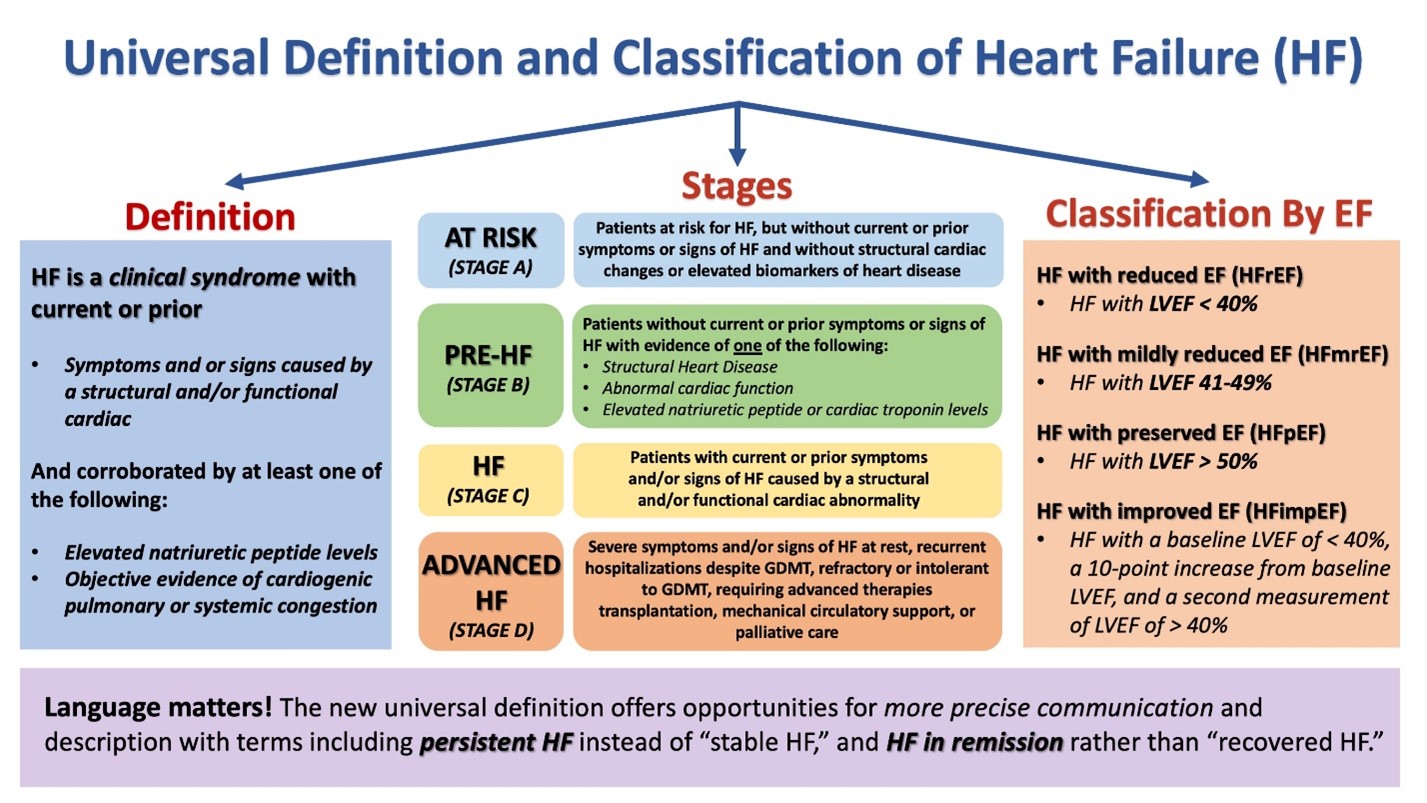
Figure 1. Universal Definition and Classification of Heart Failure. Source: American College of Cardiology. Universal Definition and Classification of Heart Failure: A Step in the Right Direction from Failure to Function. July 13, 2021.
According to the universal definition, “HF is a clinical syndrome with symptoms and/or signs caused by a structural and/or functional cardiac abnormality…” The staging of HF is as follows:
- Stage A: at risk of HF, but without current or prior symptoms
- Stage B: pre-HF, without current or prior symptoms or signs
- Stage C: HF with current or prior symptoms and/or signs of HF
- Stage D: advanced HF
When interpreting the HF definition alongside the 4 stages, one might conclude that stages A and B do not satisfy the clinical definition of heart failure. This reasoning is analogous to concluding that prediabetes is not diabetes. However, in the March 2026 release of SNOMED CT US Edition, the concept of “Congestive heart failure” (42343007) has the following descendants:
- Congestive heart failure stage B (717840005)
- Congestive heart failure stage C (67441000119101)
- Congestive heart failure stage D (67431000119105)
As a value set steward, a choice must be made to include or exclude stage B HF, and the decision should be documented in the inclusion and exclusion criteria for the value set. The apparent inconsistency between prediabetes and pre-HF classifications may be grounded in defensible clinical logic. However, when relying on terminology hierarchies and ontologies in value set authoring, each value set should be clinically curated to ensure it satisfies the needs of its intended use case.
Representing Disease Remission in Condition Value Sets
Many disorders are precoordinated with disease activity modifiers such as partial remission or full remission. Remission conveys the idea that disease symptoms and/or signs have partially or completely disappeared, but the disease could come back (relapse) later on. This differs from a cure, in which a disease is not expected to return. Even when a disorder is in complete remission, a patient would still be considered to have the disorder from a clinical perspective.
However, value sets can be scoped to differentiate between levels of disease activity. Consider the Centers for Medicare and Medicaid Services (CMS) Hierarchical Condition Category (HCC) risk adjustment models in which each HCC is essentially a value set of ICD-10-CM codes whose conditions confer a similar amount of expenditure risk and therefore are accompanied by capitated payment amounts per beneficiary. For CMS-HCC Model Category V28 in fiscal year 2027, HCC 154 represents “Bipolar Disorders without Psychosis”. The value set includes bipolar disorder codes with disease modifiers “in partial remission” but excludes codes “in full remission”, presumably because the actuarial analyses do not justify capitated payment amounts for bipolar disorder in full remission.
| ICD-10-CM Code | Term Description | HCC 154 |
| F31.70 | Bipolar disorder, currently in remission, most recent episode unspecified | No |
| F31.71 | Bipolar disorder, in partial remission, most recent episode hypomanic | Yes |
| F31.72 | Bipolar disorder, in full remission, most recent episode hypomanic | No |
| F31.73 | Bipolar disorder, in partial remission, most recent episode manic | Yes |
| F31.74 | Bipolar disorder, in full remission, most recent episode manic | No |
| F31.75 | Bipolar disorder, in partial remission, most recent episode depressed | Yes |
| F31.76 | Bipolar disorder, in full remission, most recent episode depressed | No |
| F31.77 | Bipolar disorder, in partial remission, most recent episode mixed | Yes |
| F31.78 | Bipolar disorder, in full remission, most recent episode mixed | No |
Table 3. Selected bipolar disorder codes; note that while they are all variations of bipolar disorder, note all of them are included in CMS HCC 154
The key point is that condition value sets can be scoped to represent all codes related to a condition or any meaningful subset of codes, depending on the intended use case. If disease codes address remission modifiers, consider whether they belong in your value set expansions.
Representing Disease Acuity and Relapse
Many disorders have acute, subacute, chronic, and other variations, and concepts in standard terminologies may represent these permutations. Selected examples are provided in Table 4.
| Code System | Code | Term Description |
| ICD-10-CM | N17 | Acute kidney failure |
| ICD-10-CM | N18 | Chronic kidney disease (CKD) |
| ICD-10-CM | N19 | Unspecified kidney failure |
| SNOMED CT US | 42399005 | Renal failure syndrome |
| SNOMED CT US | 14669001 | Acute kidney injury |
| SNOMED CT US | 90688005 | Chronic renal failure |
| SNOMED CT US | 236433006 | Acute-on-chronic renal failure |
Table 4. Examples of acute and chronic conditions; note that some of them specify acute or chronic disease, while others have unspecified acuity
While a “Renal Disorders” value set would presumably include all disease acuities, an “Acute Kidney Injury” value set would include only a subset of acute conditions. Note that terms with unspecified acuity (e.g., “Renal failure syndrome”) may be too general to be included in value sets that are focused on acute or chronic illness. By contrast, terms such as “Acute-on-chronic renal failure” address both acute and chronic illness and may be included in multiple value sets if editorial policies and intended use cases permit. Note that the SNOMED CT term “Acute-on-chronic renal failure” falls under the hierarchy for both “Acute kidney injury” and “Chronic renal failure”.
Relapsing disorders are characterized by the return of disease activity after a period of remission. Conditions that follow a remission–relapse pattern are generally chronic, and relapses are often acute. For example, “chronic obstructive pulmonary disease” (COPD) is a chronic condition, and an “acute exacerbation of COPD” represents a sudden worsening of the underlying disease. However, not all relapses are acute in onset or presentation. For example, relapses of solid tumors, leukemias, and lymphomas may occur gradually rather than a sudden clinical deterioration. When value sets are used to distinguish acute and chronic conditions, disease trajectory and relapse patterns should be considered during value set authoring.
Managing Disease Renaming and Reclassification
Sometimes diseases are renamed without altering diagnostic criteria, and this can be done for many reasons. When diseases are simply renamed without any downstream impact on clinical diagnosis, there should be little if any impact on value set expansions. Examples include:
- Monkeypox was renamed to mpox to reduce potential stigma
- Primary biliary cirrhosis was renamed to primary biliary cholangitis because not all patients with the disease develop cirrhosis. Non–insulin-dependent diabetes mellitus and adult-onset diabetes mellitus were renamed to type 2 diabetes mellitus to better reflect the disease regardless of insulin use or age onset. Disease renaming and reclassification can also introduce changes in diagnostic criteria or classification schemes, potentially affecting value set expansions. Let’s look at some examples.
Chronic renal failure was renamed to chronic kidney disease. While changing “renal” to “kidney” improved clarity for patients, the more significant change was broadening the definition to include earlier stages of kidney disease rather than only end-stage kidney failure. Because the diagnostic criteria changed, a chronic renal failure value set may require different expansions than a chronic kidney disease value set. Organizations should also evaluate whether they should deprecate existing chronic renal failure value sets if they no longer support intended use cases.
Heart failure was historically classified as systolic (impaired ventricular contraction during systole) or diastolic (impaired ventricular relaxation during diastole). This framework was later replaced by heart failure with reduced ejection fraction (HFrEF) and heart failure with preserved ejection fraction (HFpEF). The rationale for the change was in part due to ejection fraction providing a more objective and reproducible metric than qualitative assessments of systolic and diastolic function. In addition, the systolic–diastolic dichotomy proved overly simplistic, as most patients with heart failure exhibit abnormalities in both contraction and relaxation to varying degrees. Although HFrEF generally corresponds to what was previously termed systolic heart failure, and HFpEF generally corresponds to diastolic heart failure, the overlap is incomplete, and these categories are not fully interchangeable.
As terminologies adopt new disease names, value set stewards should determine whether legacy and current concepts belong in the same value set or should be managed separately. When diagnostic criteria remain unchanged, combining old and new terms together is often appropriate. However, when disease renaming or reclassification introduces meaningful clinical changes, separate value sets may better preserve accuracy and support distinct use cases.
Addressing Code System Incongruencies
The United States Core Data for Interoperability recommends the use of SNOMED CT or ICD-10-CM for the interoperable exchange of patient problems. Both code systems contain concepts representing nearly every clinical condition. However, there are sometimes important differences that result in conundrums when authoring condition value sets.
Let’s take a close look at hypertensive disorders. In ICD-10-CM, there are codes related to primary and secondary hypertensive disorders as well as ocular hypertension, intracranial hypertension, venous hypertension, and pregnancy-related hypertensive disorders. They are all disorders, as one would expect from a code system that is named the International Classification of Diseases. However, SNOMED CT addresses a much broader set of medical terminology that is not restricted to disorders, so it is important to look beyond the term descriptions. SNOMED CT concepts such as “Hypertension stage 1” (827069000) and “Hypertension stage 2” (827068008) may sound like disorders based on their descriptions. However, their SemanticTag attribute is “finding”, and their parent terms are “Blood pressure above reference range” and “Cardiovascular measurement – finding” which are distinctly different than the concepts in the “Hypertensive disorder” (38341003) disorder hierarchy. In SNOMED CT, sometimes terms related to the staging of a disorder are considered to be findings rather than disorders. Editorial policies should address these distinctions during value set authoring and maintenance.
ICD-10-CM and SNOMED CT sometimes differ in their use of concept modifiers. For example, neoplasms in ICD-10-CM address the body location of the neoplasm (e.g., lung, upper vs. lower lobe of lung) and whether the neoplasm is benign or malignant. SNOMED CT may address body location, benign vs. malignant, histology (e.g., adenocarcinoma, large cell carcinoma, small cell carcinoma, vs. squamous cell carcinoma of lung) and laterality (left vs. right). These differences reflect their intended purposes. ICD-10-CM is designed primarily for research and billing purposes, while SNOMED CT is designed to be more clinically granular and provide greater relevance to patient care and documentation. As a result, a “Non-small cell lung cancer” may have SNOMED CT expansions only, as there are no such terms in ICD-10-CM that address histological subtypes.
Building Condition Value Sets that Are Fit For Purpose
The six challenges described here underscore a fundamental truth that condition value sets are not objective representations of clinical reality. Rather, they are curated interpretations shaped by purpose and context. Because a single “correct” condition value set rarely exists, they must be designed, so they are fit for purpose. Each inclusion or exclusion decision reflects an underlying assumption about how a condition should be interpreted and used. Recognizing these challenges and establishing consistent approaches to addressing them is an essential part of responsible value set stewardship.
Organizations that treat value sets as living clinical assets rather than static code lists are better positioned to support interoperability, quality reporting, analytics, and emerging AI initiatives. Effective value set authoring requires ongoing governance, clearly defined editorial policies, and clinical expertise to ensure value sets remain accurate, relevant, and fit for purpose as medicine, terminology standards, and regulatory requirements evolve.
Clinical Architecture helps healthcare organizations author, govern, and maintain clinically meaningful value sets through expert terminology services and industry-leading terminology management solutions. If your organization is looking to improve the quality, consistency, or governance of its value sets, our experts can help.
Additional Resources